Who is the Right Candidate for Deep Brain Stimulation (DBS)?
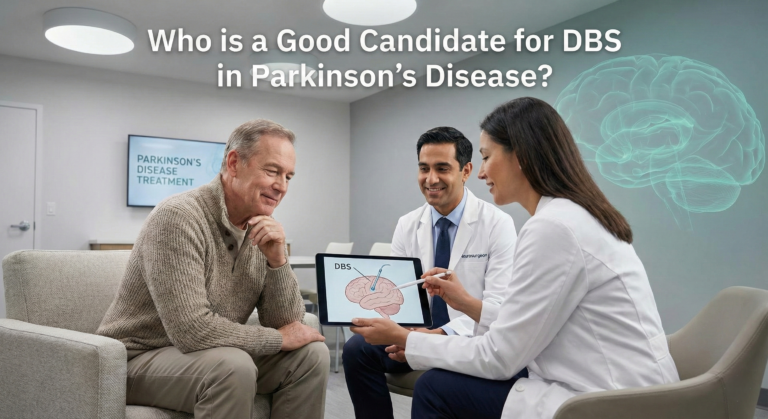
Deep Brain Stimulation (DBS) is a surgical therapy in which neurosurgeons implant a small “brain pacemaker” device that sends gentle electrical pulses to specific deep brain areas. DBS is FDA-approved for severe movement disorders like Parkinson’s disease, essential tremor and dystonia (and even certain cases of OCD or epilepsy). In fact, over 250,000 people worldwide have received DBS. For Parkinson’s patients, these pulses often markedly reduce symptoms like tremor, stiffness and slowed movement, improving overall quality of life. Typically, DBS is considered when Parkinson’s symptoms can no longer be fully controlled with medications.
Who is a Good Candidate for DBS in Parkinson’s Disease?
Doctors select DBS candidates carefully. In general, DBS is offered to people with “typical” (idiopathic) Parkinson’s who meet several key criteria. Common eligibility factors include:
- Several years of PD –You’ve usually had Parkinson’s for several years (often at least 5 or more) so that the diagnosis is clear.
- Significant motor fluctuations or dyskinesias- You experience disabling tremor, stiffness or involuntary movements that interfere with daily life, and motor “on-off” fluctuations despite optimized medication.
- Good medication response- Your Parkinson’s symptoms improve well when you take levodopa or similar medications (typically at least a 30% benefit). (Good levodopa response predicts better DBS results.)
- No major cognitive or psychiatric problems – You have intact thinking and memory, and no severe dementia or uncontrolled depression/psychosis. (Doctors screen carefully for dementia or severe mood disorders, as these make surgery less safe or effective.)
- Overall good health- You are healthy enough to tolerate surgery (no serious heart/lung disease, bleeding disorder, or active infection). (For example, DBS is usually deferred if there are medical conditions like bleeding risk, infection, or incompatible implants such as certain pacemakers.)
- Age and support – Many centers prefer patients under ~70, but older individuals without serious medical issues can still benefit. You should also have a good support system (family or caregivers) who can help with post-operative care and follow-up appointments.
Parkinson’s experts stress that DBS candidates must be carefully evaluated by a movement-disorders team. This usually includes a neurologist and neurosurgeon (and often a neuropsychological exam) to confirm the above factors. For example, the Parkinson’s Foundation notes that the best DBS candidates have had PD for years, have severe tremor or dyskinesia not controlled by medication, and still show strong improvement with levodopa.
DBS for Other Conditions
While this article focuses on Parkinson’s disease, DBS is also used for other disorders. For essential tremor, DBS can be considered if the tremor (e.g. in the hands or head) is very disabling and does not respond to at least two medications (like propranolol and primidone). Dystonia (involuntary muscle contractions causing twisting postures) can also be treated with DBS in severe cases. DBS is FDA-approved for certain dystonias and may help people with painful, medication-resistant dystonic movements. Additionally, DBS has been used under specialized care for severe Obsessive-Compulsive Disorder (OCD) and to reduce frequent seizures in epilepsy. (These uses are less common and often done in clinical-trial settings or at expert centers.)
What DBS Can (and Cannot) Do
DBS can dramatically improve some motor symptoms of Parkinson’s for the right patient. Studies and expert sources report that DBS often “stops the abnormal brain activity” that causes tremors, rigidity and slow movements. In practice, most patients experience significant relief from:
• Tremor (shaking) – often the symptom that improves most.
• Rigidity/stiffness – muscles feel looser.
• Bradykinesia – slowness of movement improves.
• Dyskinesias – involuntary writhing movements (usually medication-induced) are reduced.
• “Off-time” – periods when medications wear off become shorter or less severe.
However, it’s important to have realistic expectations. DBS is not a cure for Parkinson’s. Mayo Clinic notes that “DBS won’t cure your condition, but it may help lessen your symptoms”. It cannot stop disease progression. As the Mayo site explains, symptoms often improve but “often don’t go away completely,” and patients still need some medications. DBS generally does not improve non-motor problems such as thinking/memory issues, mood, sleep disturbances or fatigue. It also may have little effect on balance problems or speech freezing.
In other words, DBS works best for the classic motor features (tremor, rigidity, slowness) in patients who have already been shown to benefit from medication. If a patient’s symptoms never responded to levodopa, DBS is unlikely to help. On the positive side, many patients with DBS find they can reduce their medication dose after surgery, which may lessen side effects. Also, modern DBS systems allow programming adjustments: the device is usually turned on a few weeks after surgery and tuned over several visits. Some mild side effects (tingling sensations, balance or speech changes, mood swings) can occur, but doctors can adjust the settings to minimize these.
Who Is Not an Ideal Candidate?
Certain factors typically exclude someone from DBS consideration. These include:
- Atypical Parkinsonism. If your syndrome is not idiopathic PD (for example, if you have multiple system atrophy, progressive supranuclear palsy or another variant), DBS is usually not recommended.
- Poor medication response. If levodopa or other meds never gave clear benefit, DBS is unlikely to help.
- Significant cognitive or psychiatric issues. Active dementia, severe depression, apathy or uncontrolled psychosis are contraindications. (Doctors check carefully for memory and mood problems because DBS can sometimes worsen these if they already exist.)
- Other medical risks. Serious medical problems that make brain surgery dangerous (like uncontrolled bleeding disorders, infections, or severe heart/lung disease) are red flags. Also, having certain implanted devices (e.g. some pacemakers or metal fragments) or being pregnant would make DBS unsafe.
- Lack of support. Since DBS requires many follow-up visits and programming adjustments, a poor social support situation can be a barrier.
In short, good candidates are those who stand to gain noticeable motor improvement with acceptable risk. Those with serious health problems, unclear diagnosis or severe non-motor issues are usually not good candidates.
Talking with Your Healthcare Team
Deciding on DBS is a personal and collaborative process. If you think DBS might be right for you or your loved one, the next step is to talk to your neurologist and neurosurgeon. Movement disorder specialists usually evaluate DBS candidates together with neurosurgeons and often a neuropsychologist. You’ll review MRI brain scans, a trial of medication “on” and “off,” and possibly cognitive testing to make sure DBS is safe and likely helpful. It’s also wise to learn from others’ experiences: patient support groups and Parkinson’s foundations can connect you with people who have had DBS.
Remember, DBS is an elective procedure. Your care team will help weigh the pros and cons. Mayo Clinic advises patients to “weigh the risks and potential benefits” carefully. With careful selection, however, many DBS recipients experience a dramatic reduction in tremor and better on-time, leading to a significant boost in daily functioning and quality of life.
In summary: DBS can offer real relief for the right Parkinson’s patient, but it’s not for everyone. People with typical, medication-responsive Parkinson’s and disabling motor symptoms often see the best results. By working closely with specialists, you can determine if you fit the criteria and make an informed decision. Discuss your individual situation and expectations openly with your doctor – together you can find the treatment plan that’s best for you.
If you need further assistance to understand whether you are a good candidate of dbs or not the connect with us now – 9930990777
Sources: Authoritative medical sources including Mayo Clinic, the Parksinson’s Foundation, and neurology specialists were used to compile these guidelines. These reflect current expert insights on DBS candidacy and outcomes for Parkinson’s disease.