
last updated on 6 August 2026
Deep Brain Stimulation (DBS) is one of the most advanced and effective surgical treatments for patients suffering from Parkinson’s disease, dystonia, essential tremor, epilepsy, and other complex neurological disorders that are no longer adequately controlled with medication.
In India, DBS surgery has evolved significantly over the past two decades, with outcomes today matching the best international centers. A major reason for this progress is the work of Dr Paresh Doshi, a pioneer of functional and stereotactic neurosurgery, who has played a key role in establishing and advancing DBS surgery in the country.
This page provides a complete, transparent guide to DBS surgery — covering who it is for, how it works, benefits, risks, cost in India, recovery, and long-term outcomes — to help patients and families make informed decisions.
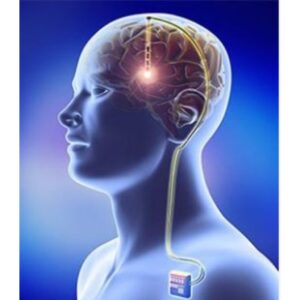
Deep Brain Stimulation is a reversible and adjustable neurosurgical procedure in which fine electrodes are implanted into specific, carefully selected areas of the brain that regulate abnormal electrical activity.
These electrodes are connected to a programmable device (neurostimulator) implanted under the skin of the chest. The device delivers controlled electrical impulses that help restore balance in brain circuits, leading to improvement in symptoms such as tremors, rigidity, and involuntary movements.
Unlike lesioning procedures, DBS does not destroy brain tissue, making it a safer and more flexible long-term treatment option.
DBS surgery is most commonly recommended for the following conditions:
Essential Tremor
Epilepsy (Selected Cases)
Other Selected Conditions
DBS is not a one-size-fits-all procedure. Proper patient selection is the single most important factor determining long-term success.
You may be a good candidate if:
DBS may not be suitable if:
A comprehensive evaluation by an experienced functional neurosurgery team is essential before proceeding.
Includes neurological examination, imaging (MRI/CT), medication assessment, and neuropsychological testing when required.
Using advanced stereotactic techniques, electrodes are placed with high precision into targeted brain regions responsible for symptom control.
The pulse generator is implanted under the skin of the chest and connected to the brain electrodes.
DBS settings are gradually optimized over weeks to months to achieve maximum benefit with minimal side effects.
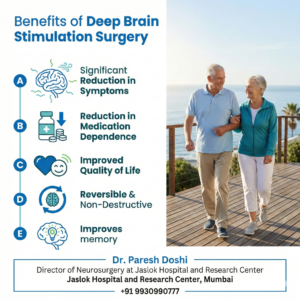
Patients who are carefully selected may experience:
DBS does not cure neurological diseases, but it can dramatically improve symptom control when medications are no longer sufficient.
The cost of DBS surgery in India typically ranges between:
₹15–30 lakhs (USD 15,000–35,000)
The exact cost depends on:
Despite the lower cost compared to Western countries, India offers international-standard DBS systems, advanced surgical infrastructure, and highly experienced surgeons.
Recovery
Long-Term Management
Most patients notice progressive improvement over time as stimulation settings are optimized.
When patient selection and surgical precision are optimal:
Outcomes depend on disease type, duration, surgical accuracy, and long-term follow-up
DBS is among the most technically demanding procedures in neurosurgery. Outcomes are strongly influenced by:
Dr Paresh Doshi is internationally recognized for his contribution to functional and stereotactic neurosurgery, with decades of experience and one of the largest DBS case volumes in the region. He is frequently referred complex and revision cases from across India and abroad.
India is a preferred destination for DBS surgery due to:
Dedicated teams assist international patients with medical visas, travel, accommodation, and follow-up planning.
If you or a loved one is considering DBS surgery, a personalized evaluation is the most important first step.
📍 Jaslok Hospital, Mumbai, India
📞 9930990777 – Consultations available for Indian and international patients
📩 Book an appointment via WhatsApp
WhatsApp us