
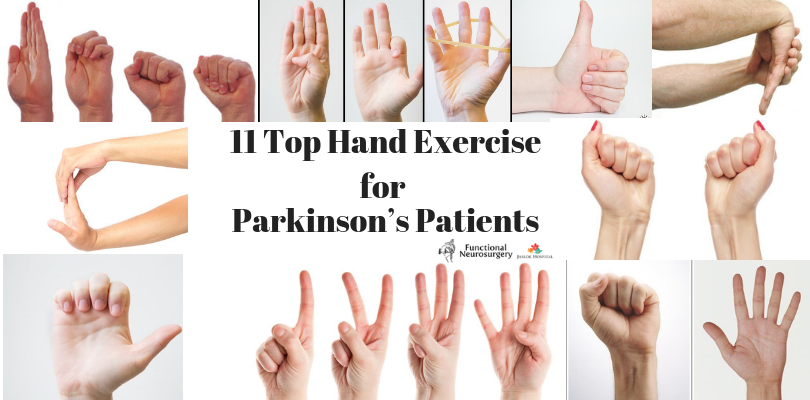
Today, we will discuss the 11 top hand exercise for Parkinson’s patients. When you get to know that you are suffering from Parkinson’s disease. Due to Parkinson disease, you are struggling for hand tremors often.
Hand tremors can be inconvenient and create difficulties to perform daily tasks. In this circumstance, hand exercises can improve tremor and become more steady.
Nowadays, DBS is the Surgical therapies for Parkinson’s patient. DBS works best to lessen motor symptoms like stiffness, slowness, and tremor. http://ccmphealthhome.org/buy-lisinopril/
As well as Parkinson’s patient should practice daily handy exercise to improve finger and hand dexterity. A patient should meet a doctor before beginning exercises for hand tremors.
Recent systematic reviews show that task-specific hand exercises—such as buttoning shirts, writing, picking up small objects, and grip-strength activities—can improve hand dexterity, coordination, and performance in daily activities for people with Parkinson’s disease. These exercises are often more effective when performed consistently under the guidance of a physiotherapist or occupational therapist.
New evidence published in 2025 highlights that occupational therapy, including supervised hand exercises delivered in person or through tele-rehabilitation, can improve motor function, independence in daily activities, and overall quality of life for Parkinson’s patients.
Researchers continue to report that regular physical activity stimulates neuroplasticity, the brain’s ability to form new neural connections. Although hand exercises cannot stop Parkinson’s disease progression, they may help preserve fine motor skills, improve coordination, and maintain independence for longer.
Neurologists commonly recommend performing hand exercises 45–60 minutes after taking Parkinson’s medication, when symptoms such as stiffness and slowness are better controlled. This allows patients to perform movements with greater accuracy and comfort.
Recent rehabilitation studies emphasize that 10–20 minutes of daily hand exercises performed consistently are generally more beneficial than occasional long sessions. Regular practice helps maintain grip strength, finger flexibility, manual dexterity, and hand coordination.
Parkinson’s disease can affect hand movements, coordination, grip strength, and fine motor skills. Everyday activities such as writing, buttoning clothes, holding utensils, typing, or using a mobile phone may gradually become difficult due to tremors, stiffness, and slowness of movement.
Regular hand exercises can help improve flexibility, finger control, dexterity, and muscle strength. These exercises may also reduce stiffness and support better independence in daily activities.
This guide covers some of the most effective hand exercises for Parkinson’s disease patients that can be safely practiced at home. (neurologicalsurgery.in)
Parkinson’s disease affects the brain’s control over movement. As symptoms progress, patients may experience:
Hand exercises help maintain mobility and encourage better control of everyday hand functions. Regular movement may also improve blood circulation and reduce stiffness. (neurologicalsurgery.in)
Finger tapping improves finger speed and coordination.
This simple exercise helps reduce stiffness in the fingers and palm.
Using a soft stress ball can improve grip strength.
Finger lifts help strengthen individual fingers.
Wrist flexibility is important for writing and daily hand activities.
The thumb is essential for gripping and holding objects.
This exercise strengthens hand and finger muscles.
Fine motor activities help improve precision movements.
Parkinson’s disease often causes handwriting to become smaller (micrographia).
Stretching helps maintain flexibility and reduces stiffness.
Therapy putty or soft clay can improve hand strength.
To get maximum benefit:
Consistency is more important than intensity. Even short daily sessions can provide meaningful improvement over time. (neurologicalsurgery.in)
Along with hand exercises, patients may benefit from:
A multidisciplinary approach often provides the best results for managing Parkinson’s disease symptoms.
Seek medical advice if:
A Parkinson’s specialist or occupational therapist can design personalized exercises based on the patient’s condition.
Hand exercises can play an important role in improving movement, coordination, flexibility, and independence in people living with Parkinson’s disease. Regular practice may help patients perform daily activities more comfortably and maintain better hand function over time.
Simple exercises such as finger tapping, stress ball squeezes, wrist rotations, and writing practice can make a meaningful difference when performed consistently. Combined with medical treatment and rehabilitation therapy, these exercises can support a better quality of life for Parkinson’s patients.
Hand exercises help improve finger flexibility, grip strength, hand coordination, and fine motor skills. Regular practice can make everyday activities such as writing, buttoning clothes, eating, and using utensils easier.
Most specialists recommend practicing hand exercises for 10 to 20 minutes daily or as advised by a physiotherapist. Consistency is the key to maintaining hand function.
Hand exercises do not cure tremors, but they may improve muscle control, coordination, and dexterity, helping patients perform daily tasks more efficiently.
Common exercises include finger tapping, thumb-to-finger touches, squeezing a soft therapy ball, wrist rotations, finger stretches, coin-picking exercises, and handwriting practice. A physiotherapist can recommend exercises based on individual needs.
Hand exercises are generally easier to perform during the medication “on” period, usually 45 to 60 minutes after taking prescribed medication, when stiffness and slowness are reduced.
Yes. Regular handwriting practice combined with finger-strengthening and coordination exercises may help improve writing size, control, and legibility, although results vary among individuals.
Hand exercises are generally safe when performed correctly. Patients with severe joint pain, arthritis, or recent hand injuries should consult their healthcare provider before starting a new exercise program.
No. Hand exercises are an important part of rehabilitation but should complement, not replace, prescribed medications, physiotherapy, occupational therapy, or other treatments recommended by a neurologist.
WhatsApp us