
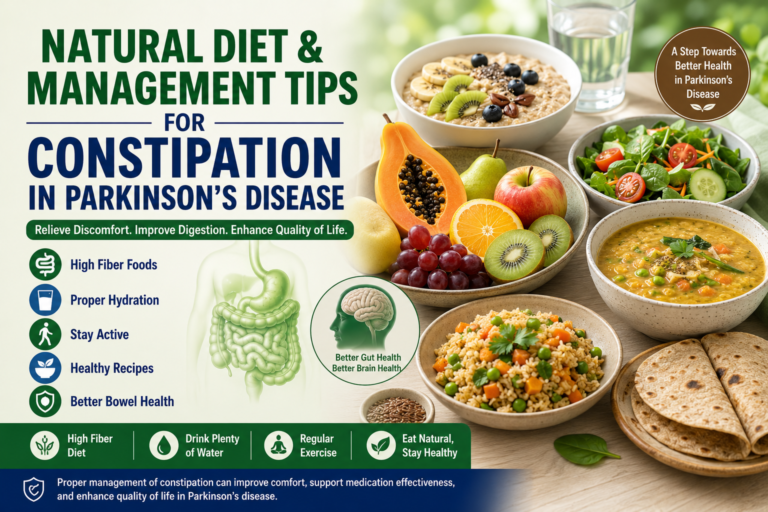
Constipation is one of the most common non-motor symptoms of Parkinson’s disease. Many patients experience difficulty passing stools, bloating, hard stools, incomplete bowel movements, and digestive discomfort even before movement-related symptoms begin.
Parkinson’s disease affects not only movement but also the digestive system. Slower bowel movement and reduced intestinal muscle activity can make constipation a persistent problem for many patients.
Proper constipation management in Parkinson’s disease is important because untreated constipation can worsen discomfort, reduce medication effectiveness, affect appetite, and lower quality of life.
This guide explains the causes of Parkinson’s constipation, diet tips, home remedies, constipation recipes, and the best ways to manage constipation naturally and safely
Constipation in Parkinson’s disease occurs because Parkinson’s affects the autonomic nervous system, which controls digestion and bowel movement.
The disease can slow the movement of food through the intestines, leading to:
Many people ask:
“Can Parkinson’s disease cause constipation?”
Yes. Parkinson’s disease and constipation are strongly connected, and constipation may sometimes appear years before motor symptoms develop.
Several factors contribute to Parkinson constipation, including:
Some patients also ask:
“Does Syndopa cause constipation?”
Certain Parkinson’s medications may contribute to digestive issues in some individuals, although constipation is more commonly related to the disease itself and reduced gut movement.
Common symptoms include:
Patients with advanced Parkinson’s disease may also experience:
Many patients wonder:
“Why is it hard for me to swallow food?”
Parkinson’s disease can affect throat and swallowing muscles, making swallowing difficult over time.
Untreated constipation in Parkinson’s disease may:
Proper Parkinson’s disease constipation management can significantly improve daily comfort and digestive health.
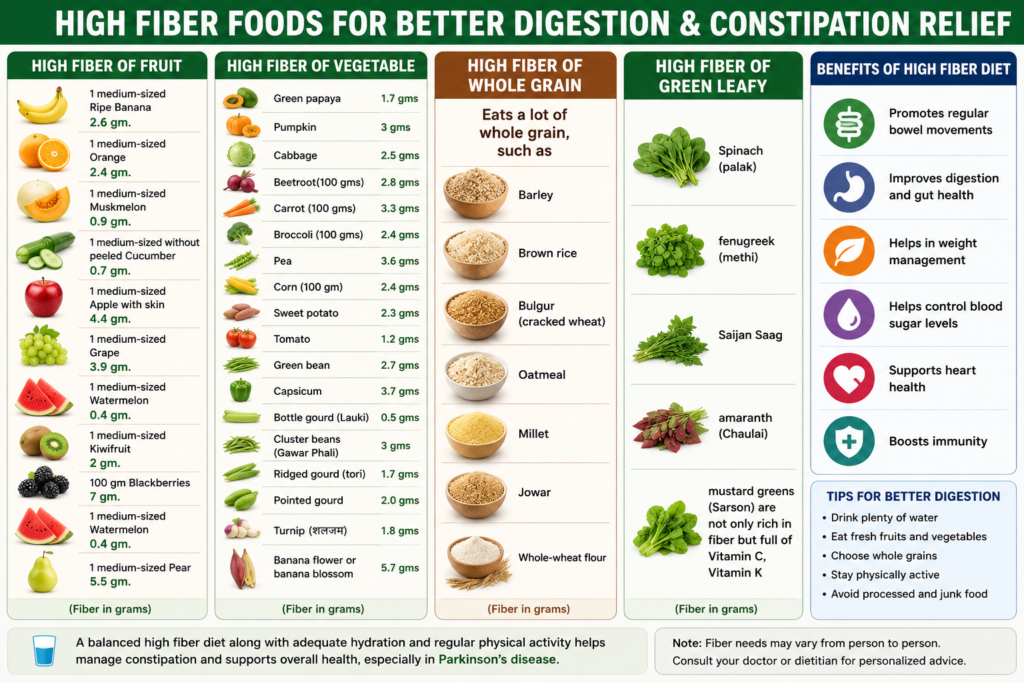
When we talk about the proper Management of Constipation in Parkinson’s Disease. Eat a balanced diet with ample of fibers.
Good sources of fiber are fruits, vegetables, whole grains, Green leafy, sprout, etc. Check the below list of Fiber items.
We have shared a few breakfast ideas, You can try for Parkinson’s patient.
Jowar palak Appe makes a great option for fiber-rich south Indian breakfast.
Another option for high fiber breakfast: Oats dosa, buckwheat dosa, Rava dosa, oats mutter dosa.
Avoid tea and coffee for breakfast. Always have tea or coffee one hour before or one hour after your breakfast, the objective is to let the digestion take place and the nutrients get absorbed.
Bajra roti / Jowar roti / Jowar Bajra garlic roti / Whole wheat roti
OR
Chawli Masoor dal / Moong Dal / Chana dal
Gavarfali ki skhi subzi / Hariyali mutter with flax seeds raita / Any Sabji (above list high fiber vegetables)
Clear soup with Mixed vegetables / Garlic vegetable Soup / lemony quinoa and baby spinach soup
Cabbage carrot and lettuce salad / Paneer Hara chana salad / Citrus watermelon salad / Kale masoor salad
Add also yogurt after lunch.
Note: Dinner needs to be the lightest meal of a day.
In this below diet list, we just have given an overview of the diet structure. If you have diabetic, high BP or any other issue, please consult with a good dietician. ( If Pd patient has any sort of sugar issue, they should not have few foods, so consult with a good dietician )
Start slow and increase your fiber intake by 5 grams per day. Too much fiber too soon could cause stomach aches and possibly diarrhea.
During night time, have less food. Anyone should have heavy breakfast and lunch, dinner should be light and early at night.
Parkinson’s patients can practice freehand exercise. Do not worry, a patient can practice while sitting position also.
Before practicing Any kind of exercise, discuss with your doctor and take proper guidance to physiologists.
Start practice exercise during on-period. Parkinson’s patient who has Slurred voice, they should practice voice exercise at home.
One type of Pluses / Dal Adds any type green leafy sabaji Any sabaji ( ( already mentioned the vegetable list ) Add yogurt at the last of your meal. Add plate Green salad (If Person cannot have salad during lunch meal ), they can eat after half an hour. Snack/ Tiffin: Eat something healthy
After dinner : A glass of warm water with one small tea-table spoon Isabgol. Keep it for 15 mins, after 15 mins mix it nicely, drink it daily. Caution: when you should consult with a doctor
Diet plays a major role in managing constipation in Parkinson’s disease.
Increase Fiber Intake
Fiber helps soften stools and improve bowel movement.
Is Ripe Papaya Good for Constipation?
Yes. Ripe papaya is often considered beneficial for constipation because it contains:
Papaya may help support smoother bowel movements naturally.
Drink Plenty of Water
Adequate hydration is essential for soft stools and proper digestion.
Patients should drink water regularly throughout the day unless fluid intake is medically restricted.
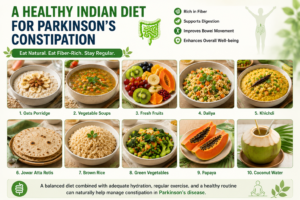
A healthy Indian diet for Parkinson’s constipation may include:
Is Upma Good for Constipation?
Upma can be helpful if prepared with:
Using whole grains and adding vegetables can improve its digestive benefits.
Benefits of Jowar Atta
Jowar atta is rich in fiber and may help support digestion and bowel regularity.
It can be included as part of a balanced diet for Parkinson’s disease patients.
Ingredients:
Benefits:
A soft and easily digestible meal with:
This can be useful for patients with swallowing difficulty or poor digestion.
Regular movement and exercise help stimulate bowel activity.
Simple activities may include:
Try using the toilet at the same time daily to encourage regular bowel habits.
Reduce:
Delaying bowel movements may worsen constipation.
Gentle exercises may help improve digestion and bowel movement.
Helpful exercises include:
Physical activity supports overall digestive health.
Some patients may require:
Treatment should always be guided by a doctor.
Seek medical advice if:
Persistent digestive symptoms should never be ignored.
Constipation in Parkinson’s disease is common but manageable with the right diet, hydration, exercise, and lifestyle modifications. Proper Parkinson’s constipation management can improve comfort, digestion, medication effectiveness, and overall quality of life.
Simple dietary changes such as increasing fiber intake, drinking enough water, eating fruits like ripe papaya, and staying physically active can make a significant difference over time.
With proper medical guidance and consistent care, patients living with Parkinson’s disease can manage constipation more effectively and maintain better digestive health.
WhatsApp us