
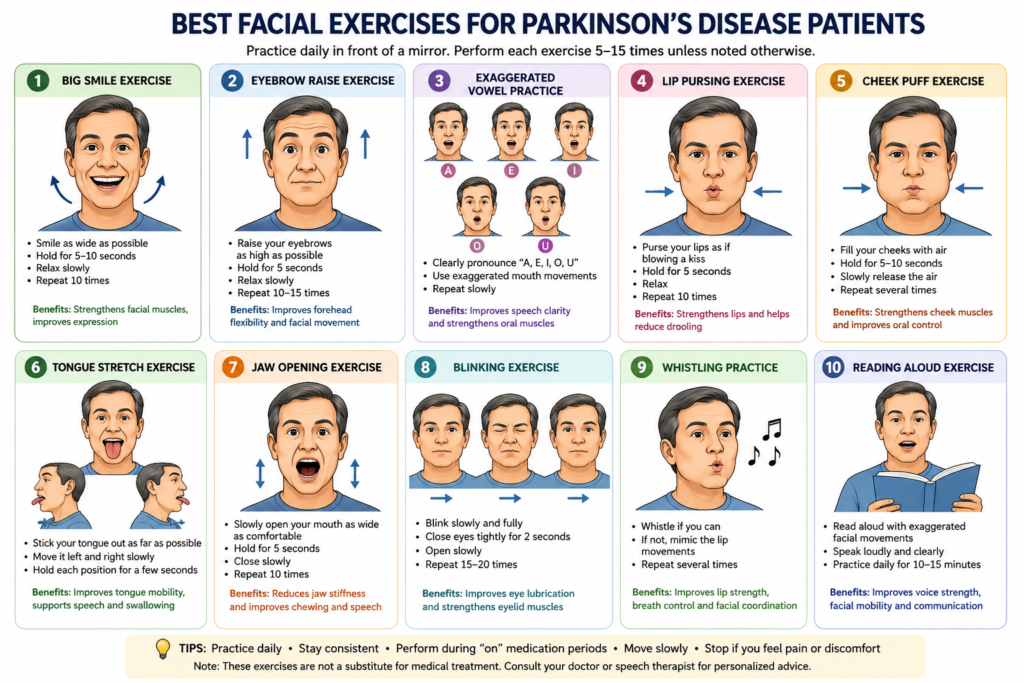

We will discuss the topic of Top Facial Exercises for Parkinson’s Patients. Our face contains over 50 various muscles & a lot of these facial muscles are rarely used.
Especially due to the symptoms of Parkinson’s disease, PD people do not use facial expressions while speaking time. Regular facial exercises stimulate blood circulation to different areas of the face.
Facial exercise helps to reduce the monotonous facial expression of Parkinson’s people. Due to Parkinson’s disease, they lose facial expression and facial movement.
Weakness in facial muscles may also cause motor problems like difficulty swallowing and drooling saliva.
Parkinson’s disease can affect facial muscles and reduce facial expressions over time. Many patients develop a condition known as “masked face” or hypomimia, where the face appears less expressive due to stiffness and reduced muscle movement.
Facial exercises can help strengthen facial muscles, improve speech clarity, support swallowing, and maintain better emotional expression. Regular practice may also help improve confidence and communication in daily life.
This guide explains some of the most effective facial exercises for Parkinson’s disease patients that can be safely practiced at home.
Parkinson’s disease affects muscle control throughout the body, including the face, mouth, jaw, and throat. Common symptoms include:
Facial exercises help stimulate muscles and improve coordination, flexibility, and movement of the face and mouth.
1) Facial exercise improves speech in PD patients.
2) It reduces monotonous facial expressions of Parkinson’s people.
3) Facial exercise increases blood circulation.
4) Facial exercises improve the eating style of Parkinson’s people
5) It firms and tightens the facial skin.
6) It helps to release any tension in the face.
7) The Facial exercises make PD patients younger.
Note: We have found some evidence that facial exercises improve facial appearance and reduce some visible aging of face – Leading author Murad Alam a dermatologist from Northwestern University
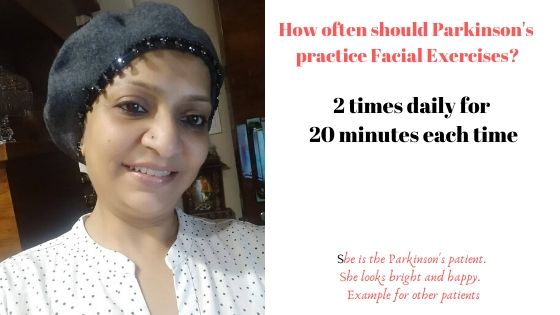
Parkinson’s people can practice 2 times daily for 20 minutes each time.
Another best facial exercise for Parkinson’s patients. Open your eyes big and wide. Hold this position for 5 counts (1…….2…..3…….4……..5)
Repeat this facial exercise 5 times.
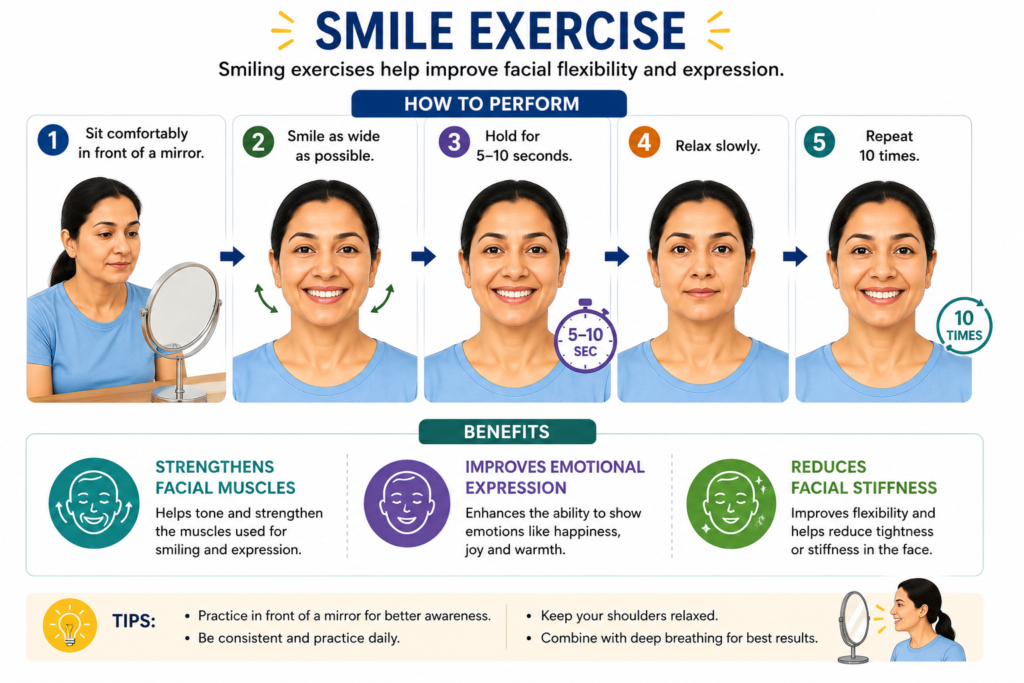
Smiling exercises help improve facial flexibility and expression.
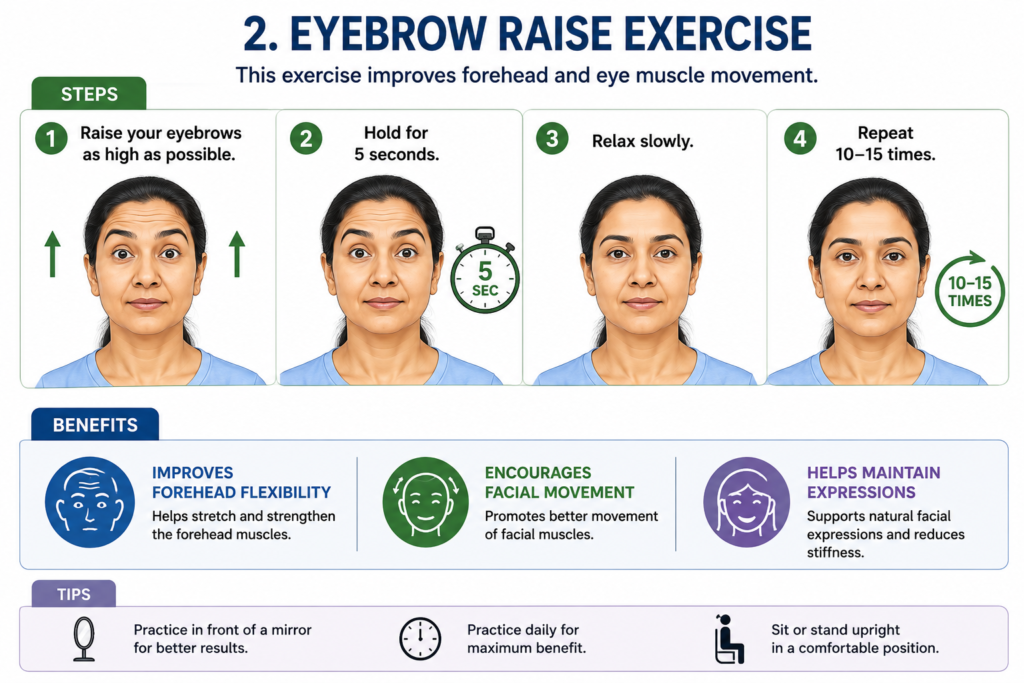
This exercise improves forehead and eye muscle movement.
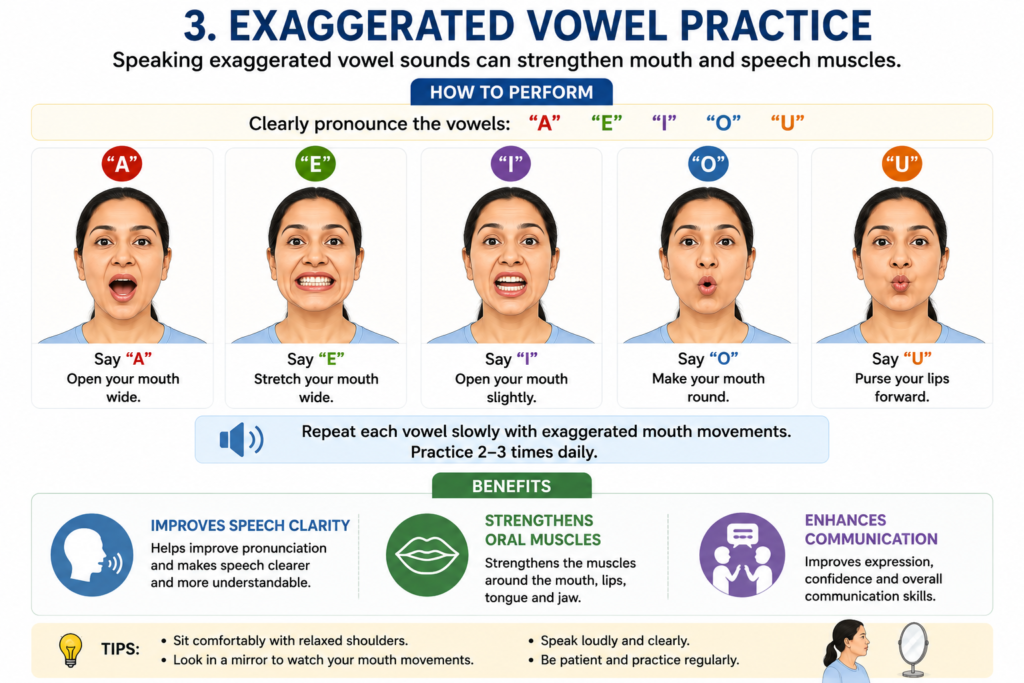
Speaking exaggerated vowel sounds can strengthen mouth and speech muscles.
Clearly pronounce:
Repeat slowly with exaggerated mouth movements.
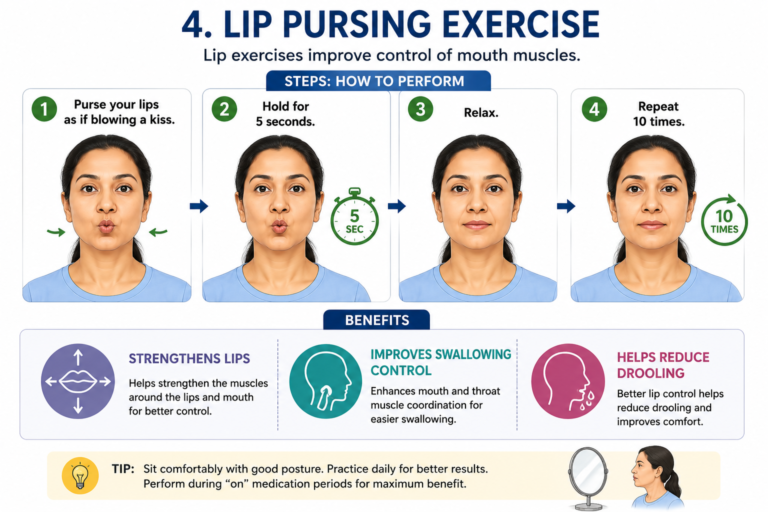
Lip exercises improve control of mouth muscles.
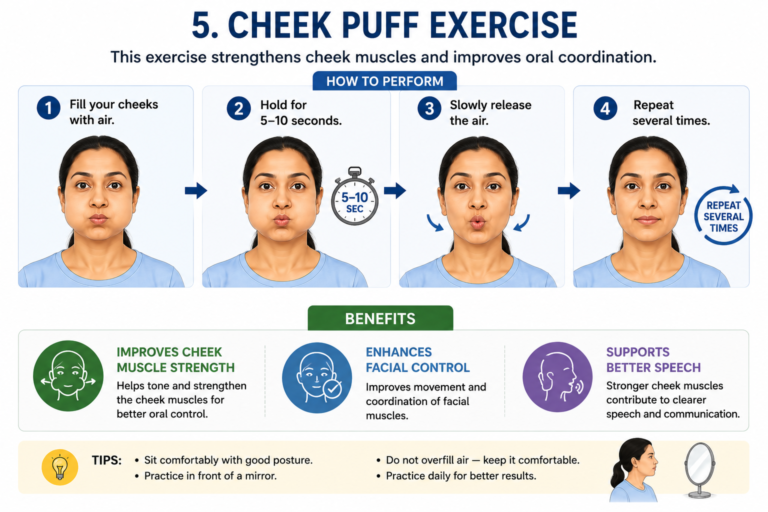
This exercise strengthens cheek muscles and improves oral coordination.
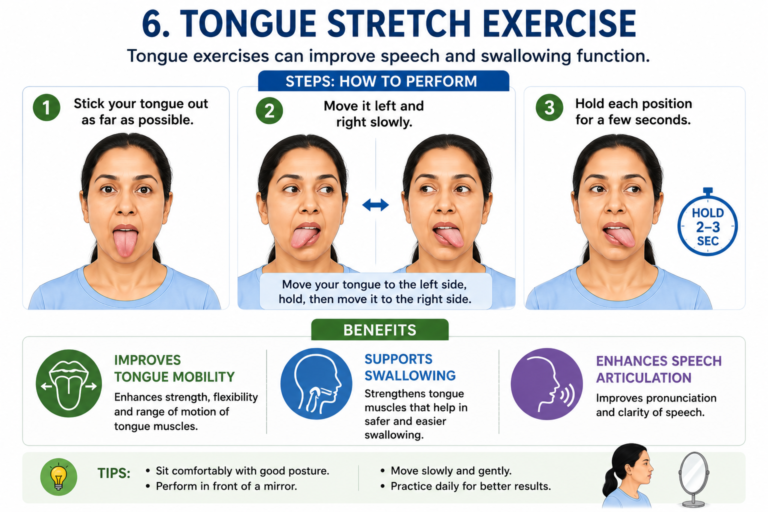
Tongue exercises can improve speech and swallowing function.
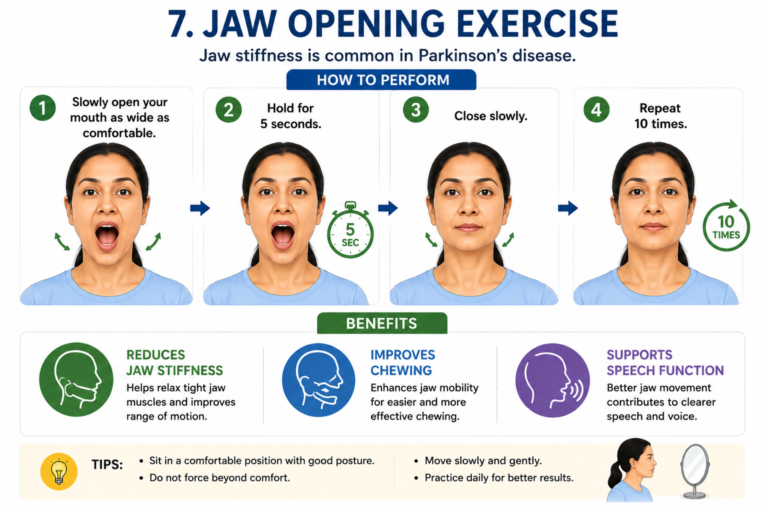
Jaw stiffness is common in Parkinson’s disease.
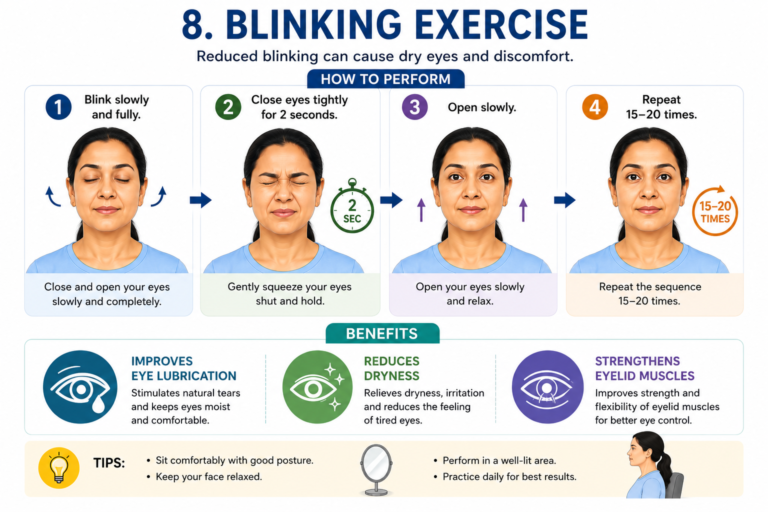
Reduced blinking can cause dry eyes and discomfort.
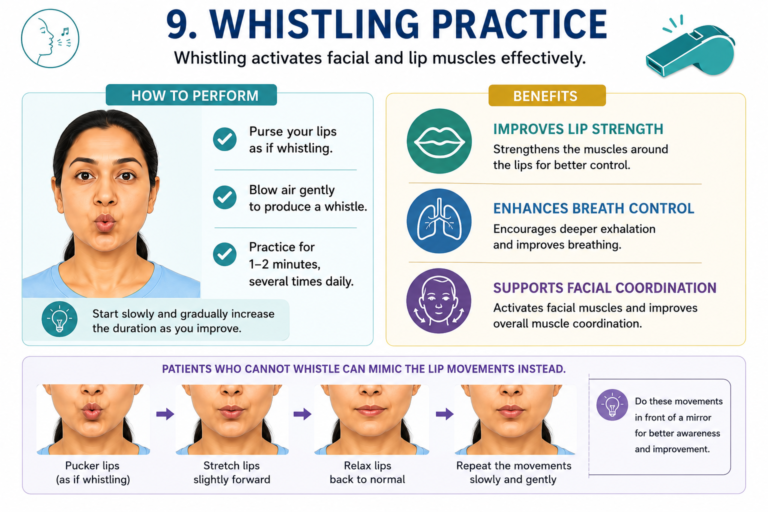
Whistling activates facial and lip muscles effectively.
Patients who cannot whistle can mimic the lip movements instead.
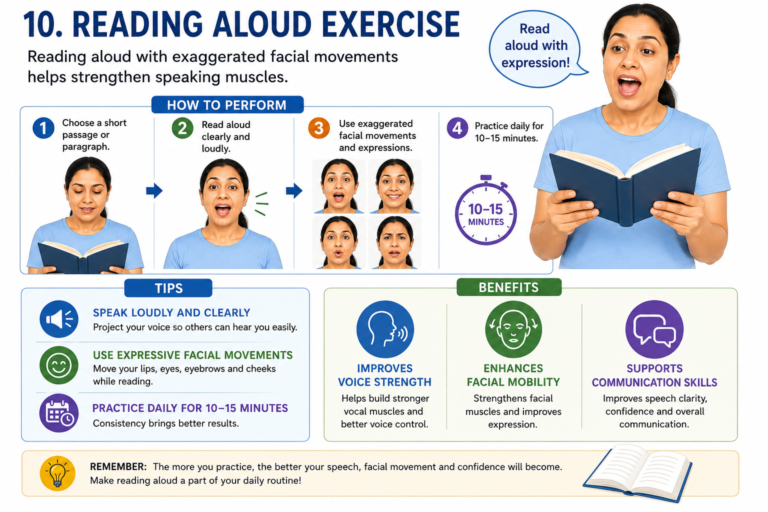
Reading aloud with exaggerated facial movements helps strengthen speaking muscles.
For video Demonstration of the same exercise, click this link Top Facial Exercise for Parkinson’s patient
For best results:
Small daily improvements can make a significant difference over time.
Along with facial exercises, patients may benefit from:
A multidisciplinary treatment approach often provides the best long-term outcomes for Parkinson’s disease patients.
Seek medical advice if:
A neurologist or speech therapist can recommend specialized therapy programs tailored to the patient’s condition.
Facial exercises can help Parkinson’s disease patients maintain stronger facial muscles, better speech clarity, improved swallowing, and more natural facial expressions. Regular practice may also support emotional communication and improve overall confidence in daily interactions.
Simple exercises such as smiling, lip pursing, cheek puffing, blinking, and exaggerated speech movements can provide meaningful benefits when practiced consistently as part of a daily routine.
You should consult with your doctor (Neurosurgeon or physiotherapy) before starting any exercise program. Your doctor might build recommendations about:
The types of exercises best suited to you, exercises that must be avoided by PD patients.
The intensity of the physical exercise (how arduous you must be working).
The period of your physical exercise and any physical limitations.
Referrals to different professionals, like a healer name of physiotherap,y will assist you in producing your own excercise program.
Know more about: Best Exercises for People With Parkinson’s Disease
Answer: Parkinson’s disease can reduce facial movements, causing a condition called facial masking (hypomimia). Regular facial exercises may help improve facial muscle strength, speech clarity, swallowing, blinking, and emotional expression when practiced consistently.
Answer: Most specialists recommend practicing facial exercises for 10–20 minutes once or twice daily. Consistency is more important than intensity, and exercises are often most effective when performed during the “on” period when Parkinson’s medications are working well.
Answer: Yes. Exercises such as exaggerated vowel pronunciation, lip movements, tongue exercises, and reading aloud may strengthen the muscles involved in speech, helping improve voice clarity and communication. They are often combined with speech therapy for better results.
Answer: Facial exercises that strengthen the lips, cheeks, tongue, and jaw may improve oral muscle control, which can help reduce drooling in some patients. Persistent drooling should be evaluated by a neurologist or speech-language pathologist.
Answer: Facial, lip, tongue, and jaw exercises may support swallowing by strengthening the muscles used during eating and drinking. Patients with choking, coughing while eating, or significant swallowing problems should seek professional evaluation.
Answer: Facial exercises are generally safe when performed gently and under professional guidance. Patients with severe swallowing problems, facial pain, or other neurological conditions should consult their healthcare provider before beginning an exercise program.
Answer: No. Facial exercises cannot cure Parkinson’s disease or stop its progression. However, they may help maintain facial mobility, improve communication, reduce stiffness, and enhance quality of life when used as part of a comprehensive treatment plan.
Answer: Yes. The best results are often achieved by combining facial exercises with prescribed medications, regular physical exercise, speech therapy, occupational therapy, and other treatments recommended by your neurologist.

WhatsApp us